Documents to prove your ancestor was born in Canada

Prior to June 2026, Immigration, Refugees and Citizenship Canada (IRCC) didn’t describe acceptable documentation for Canadian ancestors who were born in the 1800s or earlier. Their web page “Apply for a Canadian citizenship certificate: How to apply” was silent on this issue.

An archived version of the page is available here:

https://web.archive.org/web/20260614134240/https://www.canada.ca/en/immigration-refugees-citizenship/services/canadian-citizenship/proof-citizenship/apply.html#apply-paper

As a result, genealogists could only find and supply documents that provided evidence of birth based on genealogical best practice. See, for example, When Your Ancestor Has No Birth Certificate: Genealogical Proof and Canadian Citizenship.

Around June 18, 2026, however, IRCC added detailed information that’s especially relevant for Canadian ancestors born in the 1800s.

The most useful change is this: there’s no stated requirement to search for a birth registration or baptism record before using census records to prove an ancestor was born in Canada.

The revised page is available here, but I’ve included relevant screenshots below, because it’s clear this page is liable to change.

A newly added list called “What we accept” says, “[Y]ou must provide . . . 1 of the following documents,” and then, of all the documents listed, only one would be relevant for a Canadian-born ancestor, namely, a “provincial or territorial birth certificate.” (See screenshot, below.)
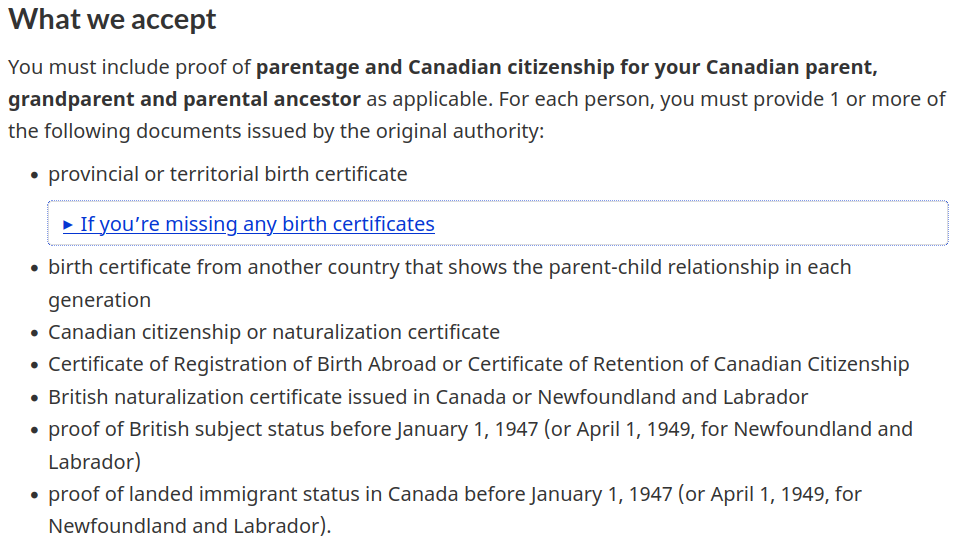
Source: Immigration, Refugees and Citizenship Canada, Apply for a Canadian citizenship certificate, (https://www.canada.ca/en/immigration-refugees-citizenship/services/canadian-citizenship/proof-citizenship/apply.html). The changes discussed in this post were first made on or about 18 June 2026; the page was most recently modified 17 July 2026.

What if there’s no birth certificate?

If you’re applying for a certificate under the provisions enacted by Bill C-3, your Canadian ancestor was probably born before the earliest birth year for which their province’s vital statistics agency issues birth certificates. In that case, a birth certificate is not available.

That’s because, after a legislated period of time, the birth registrations that each province’s vital statistics agency uses to create birth certificates are transferred to the provincial archives. For those years, the vital statistics agency can no longer issue a birth certificate.

The following chart shows the earliest birth years for which each province can issue a birth certificate:

ProvinceEarliest year available (birth registration retention period)
British Columbia1906 (120 years)
Alberta1906 (120 years)
Saskatchewan1926 (100 years)
Manitoba1926 (100 years)
Ontario1922 (104 years)
Quebec1994 (birth certificates can be issued retroactively by the Directeur de l’état civil)
New Brunswick1931 (95 years)
Nova Scotia1926 (100 years)
Prince Edward Island1906 (120 years)
Newfoundland and Labrador1926 (100 years)

If a birth certificate is not available, what document(s) will prove my ancestor was born in Canada?

IRCC’s new instructions are clear. (Well, sort of clear.) The documents you provide should probably be certified copies. And a new section called “If you’re missing any birth certificates” provides a helpful list of acceptable documents that includes records of birth, baptismal records and census records.

Certified copies are required. (Sort of.)

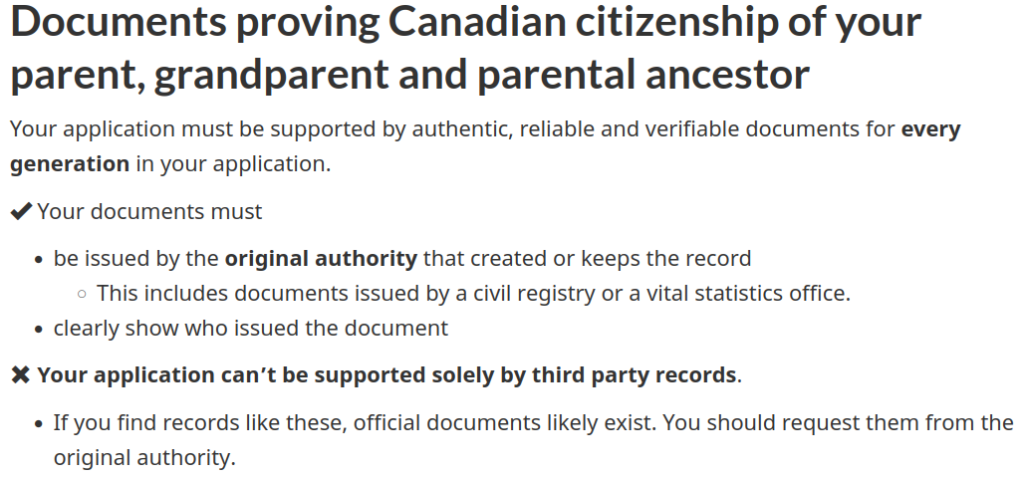
The new requirements don’t explicitly state you must provide certified copies. However, the documents must be issued by the “original authority” that keeps the originals (e.g., the archives), and must “clearly show who issued the document.”

So while IRCC doesn’t use the term “certified copy,” they’ve exactly described a certified copy of a birth registration, baptism or census record: the original is kept by an archives and the copy includes the name of the official who issues it.

Again, given the likelihood of web-page change, I will use a screenshot to document this instruction:
Birth registrations, baptism and census records: all the same to IRCC?

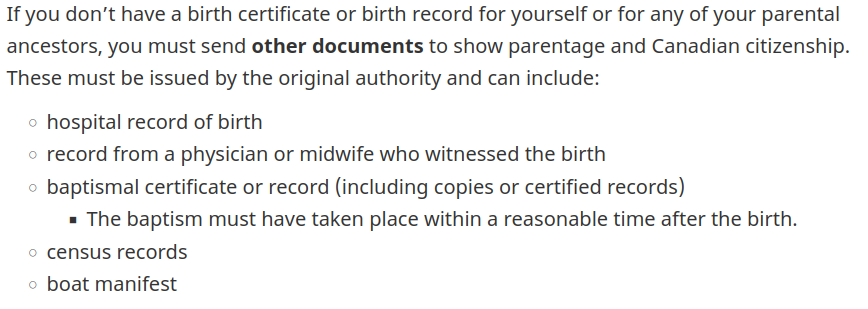
The new instructions include a section called “If you’re missing any birth certificates.” This will absolutely be the case for an ancestor born in Canada before the earliest year in the table above for their province.

In this case, IRCC will accept any of the following, as long as it was “issued by the original authority that created or keeps the record” and clearly shows who issued it:

  • a record from a physician or midwife who witnessed the birth
    • (Much like IRCC’s description of what are essentially certified copies (see above), this is probably “IRCC-speak” for a birth registration)
  • baptismal certificate or record
  • census records

Again, because these instructions may change again, here is a screenshot:
Do I have to prove I tried to get a birth registration and/or baptism before I can use census records as proof?

No. According to IRCC’s new instructions, there is no requirement to prove you tried to get a birth registration or baptism record before using census records. (You do still have to show you tried to get a provincial or territorial birth certificate, as explained below.)

The new requirements are presented in three sections:

“Documents proving Canadian citizenship of your parent, grandparent and parental ancestor”

This is the section that states the requirement for documents that are issued or kept by an “original authority” and clearly show who issued them. Here is a screenshot:
“What we accept”

This is the section that indicates you must provide a provincial or territorial birth certificate to prove the citizenship of a Canadian-born ancestor. (See the first screenshot in this post.)

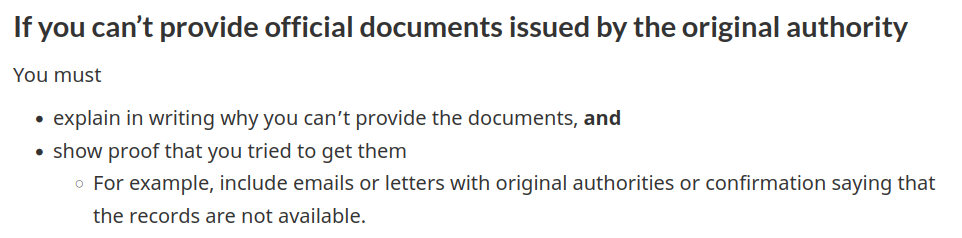
“If you can’t provide official documents issued by the original authority”

In this section, IRCC’s use of the term “official documents issued by the original authority” may be confusing — until you look at the list of documents in the previous section, which includes:

  • birth certificates
  • citizenship and naturalization certificates
  • Certificates of Registration of Birth Abroad
  • Certificates of Retention of Canadian Citizenship
  • British naturalization certificates issued in Canada or Newfoundland and Labrador

These are all “official documents” that were “issued” to individuals by government authorities.

On the other hand, the documents listed in the sub-section called “If you’re missing any birth certificates” were either never issued to anyone or never counted as “official documents.”

Therefore, these instructions apply when you can’t provide — specifically — a provincial or territorial birth certificate for an ancestor born in Canada. As we’ve seen, a provincial or territorial birth certificate is the only “official document issued by the original authority” in the list provided (see “What we accept”) that applies to someone born in Canada.

So if you can’t provide a provincial or territorial birth certificate — which is the case for everyone born in Canada before the earliest year their province issues birth certificates — you can move on to other types of documents. (See the third screenshot in this post.)

With these new instructions, once you work through the language, IRCC made their documentation requirements for anyone born in Canada very clear. Regardless of when the birth occurred, IRCC wants to see a provincial or territorial birth certificate.

This preference for a Canadian birth certificate is probably why IRCC doesn’t rank the alternatives they’ll accept “If you’re missing any birth certificates.” If you can’t provide a birth certificate — i.e., the only “official document issued by the original authority” they name that applies to a Canadian-born individual — an archival birth registration is no better for their decision making than a baptism record, and neither is better than census records. IRCC’s unranked list of these alternatives, and the lack of any other instructions for their use, make it reasonable to infer they are of equal evidentiary weight.

Census records: the low-hanging fruit of 19th-century citizenship proof

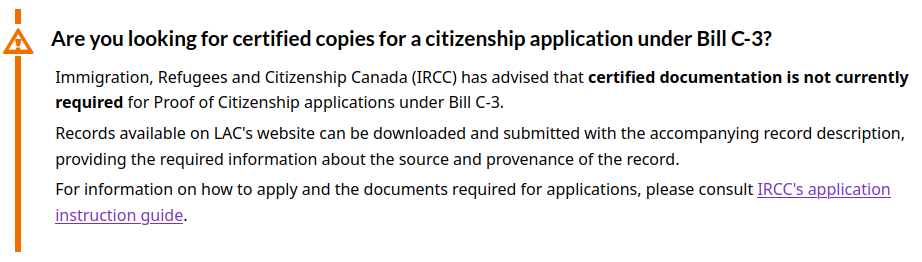
Canadian census records are available online for each decade from 1851 to 1931. Copies printed from Library and Archives Canada’s “Census search” database can be used to support a citizenship certificate application. There’s no need to order certified copies. This is made clear by a notice that appears at the bottom of each results page:
According to IRCC’s new instructions, to prove a Canadian-born ancestor’s citizenship using census records you must do two things:

  1. Explain in writing why you can’t provide a birth certificate, which would be the “official document issued by the original authority” that proves their citizenship. (Their birth predates the earliest birth certificates issued by their province’s vital statistics agency.)
  2. Show proof that you tried to get a birth certificate from the relevant vital statistics agency (e.g., an email exchange with the province’s vital statistics agency requesting a birth certificate for someone born in [insert year here, e.g., 1868], and their reply).

Putting it together

In other words, if census records show your ancestor was born in Canada, IRCC’s new instructions let you submit them without first searching for a birth registration or baptism. You will still need to explain why no birth certificate is available, and show you tried to get one.

A final lesson from IRCC’s June 2026 update: screenshot the instructions as they appear on the day you apply, and consider including them with your application. As of this writing, citizenship certificate applications take about three years to process. The page you relied on may not be the page your application is judged against, so keep proof of what it said.

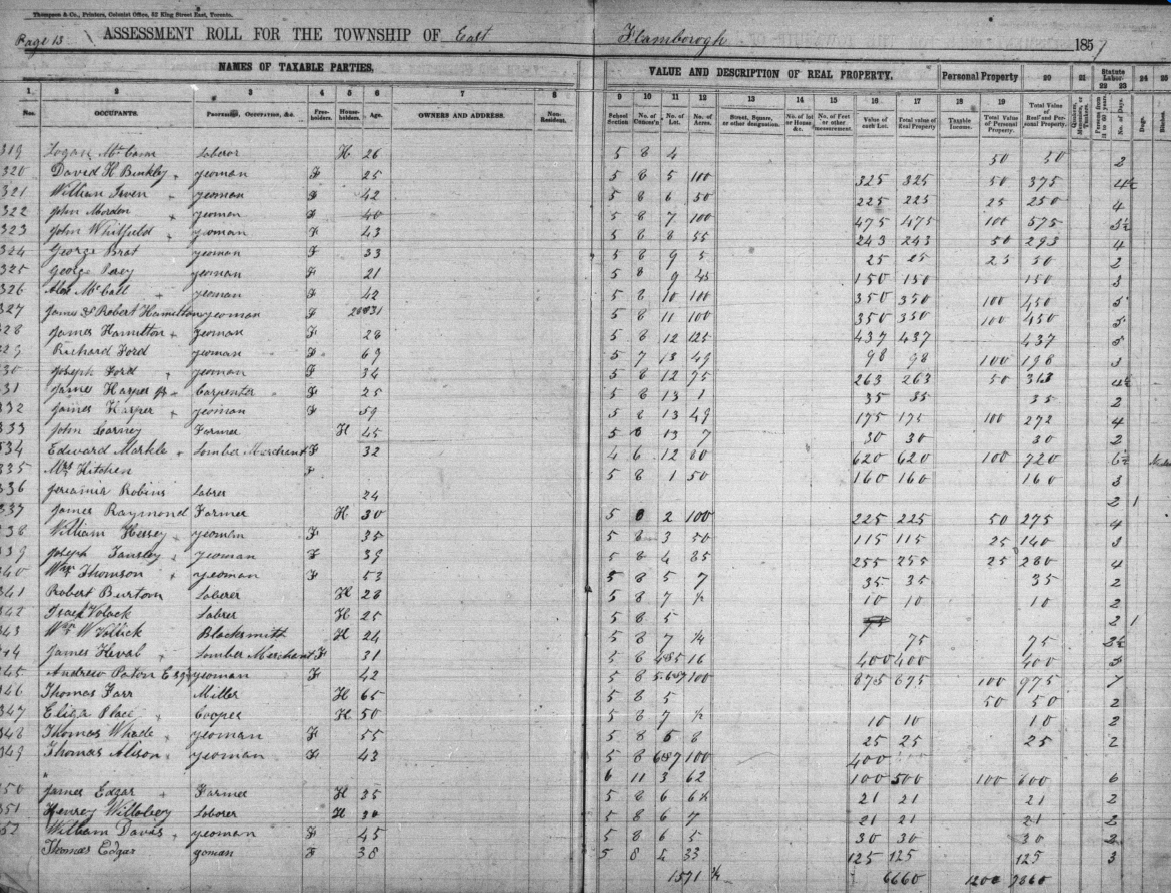
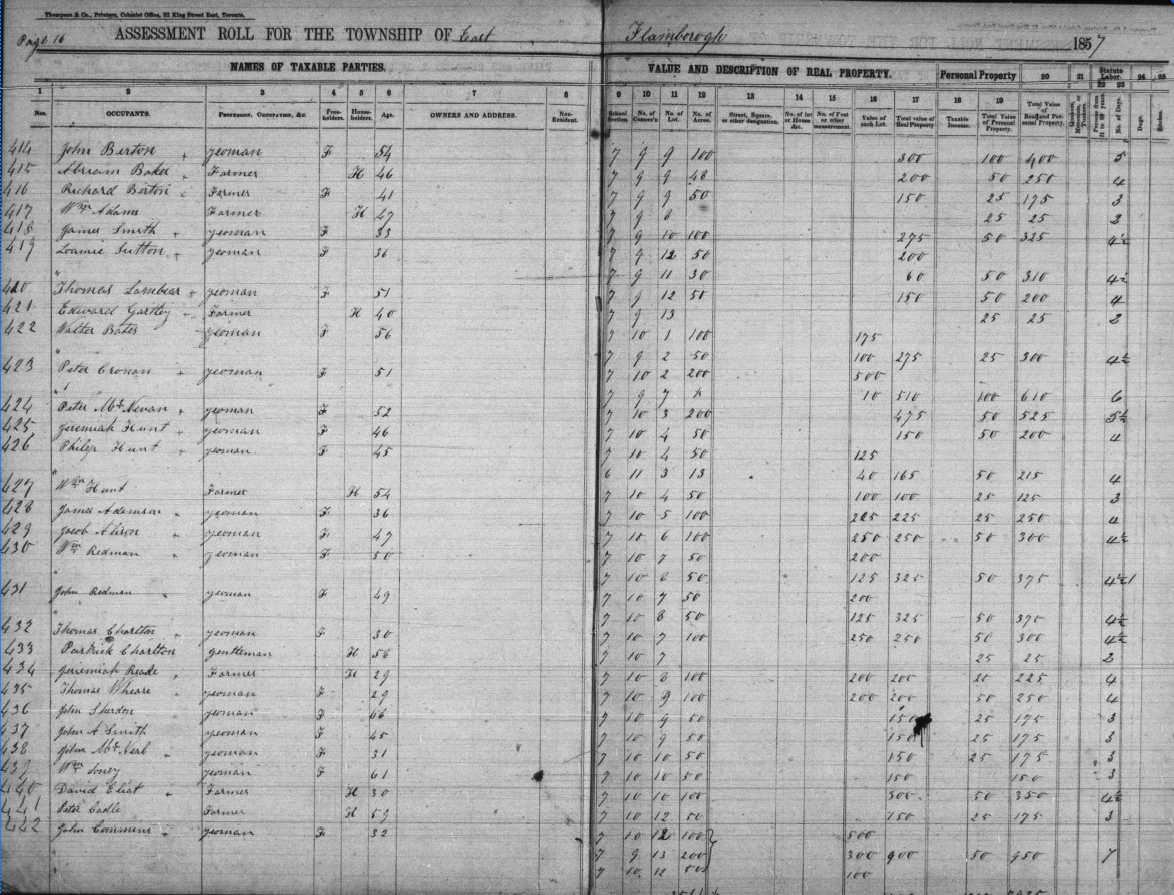
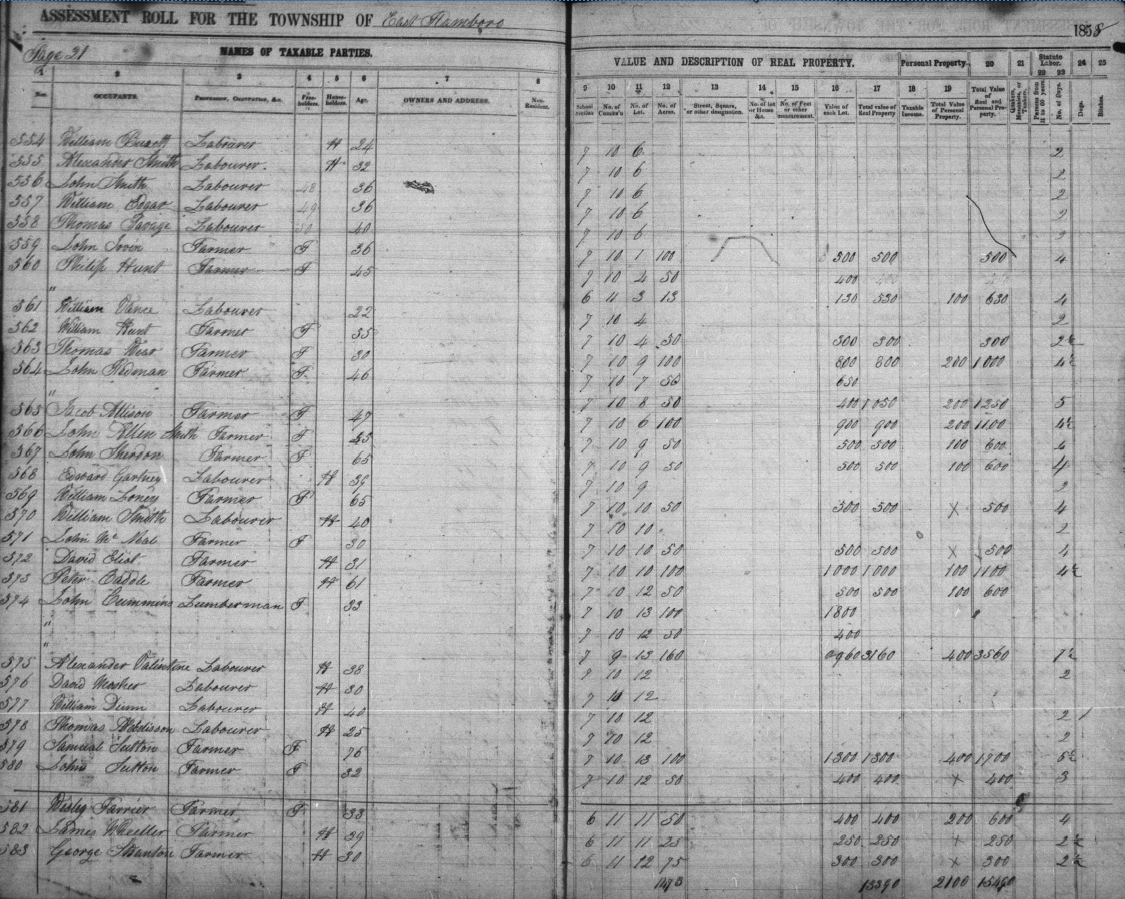
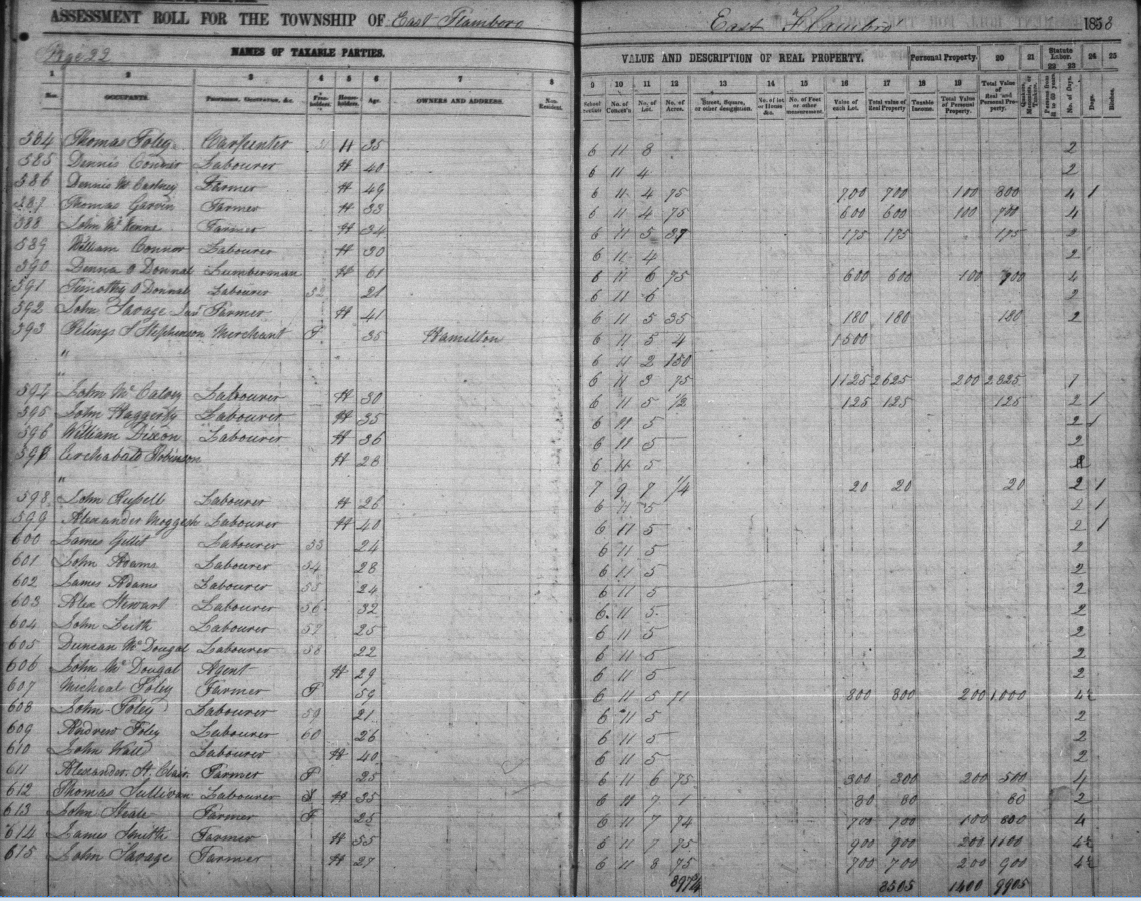
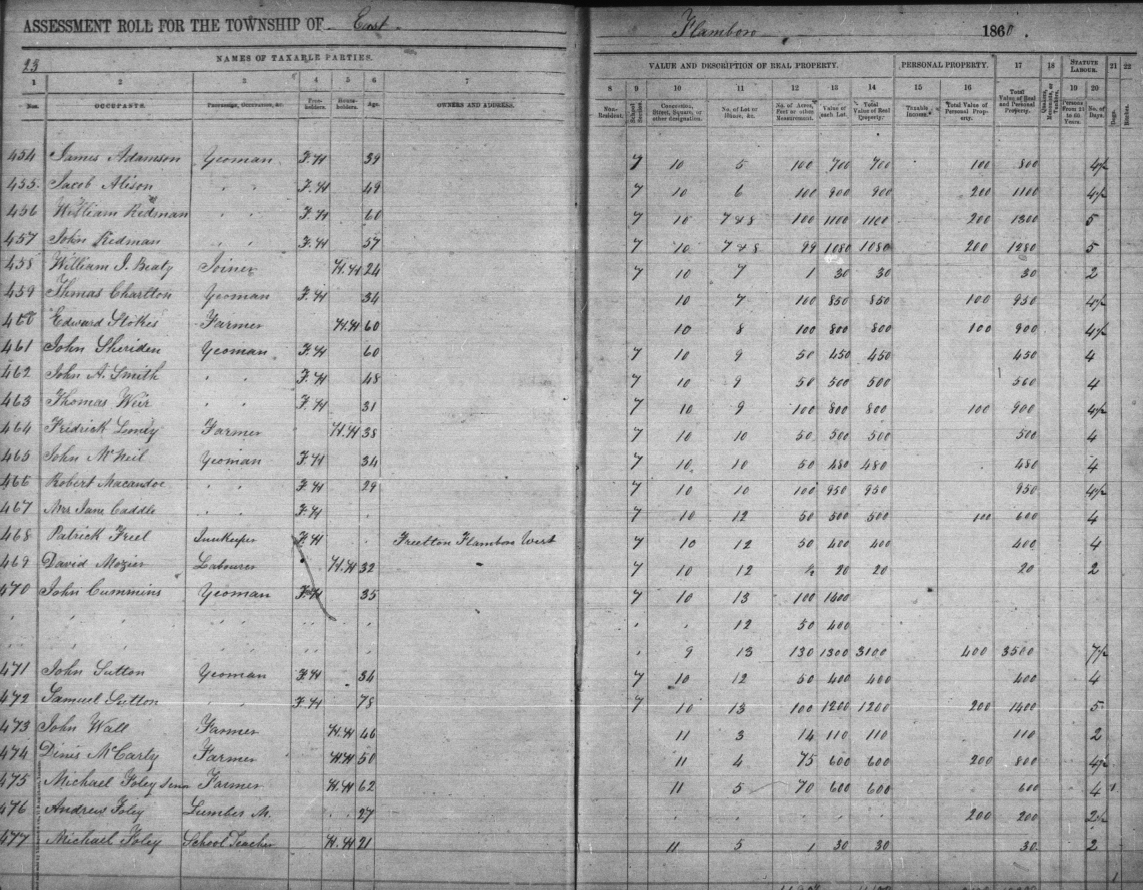
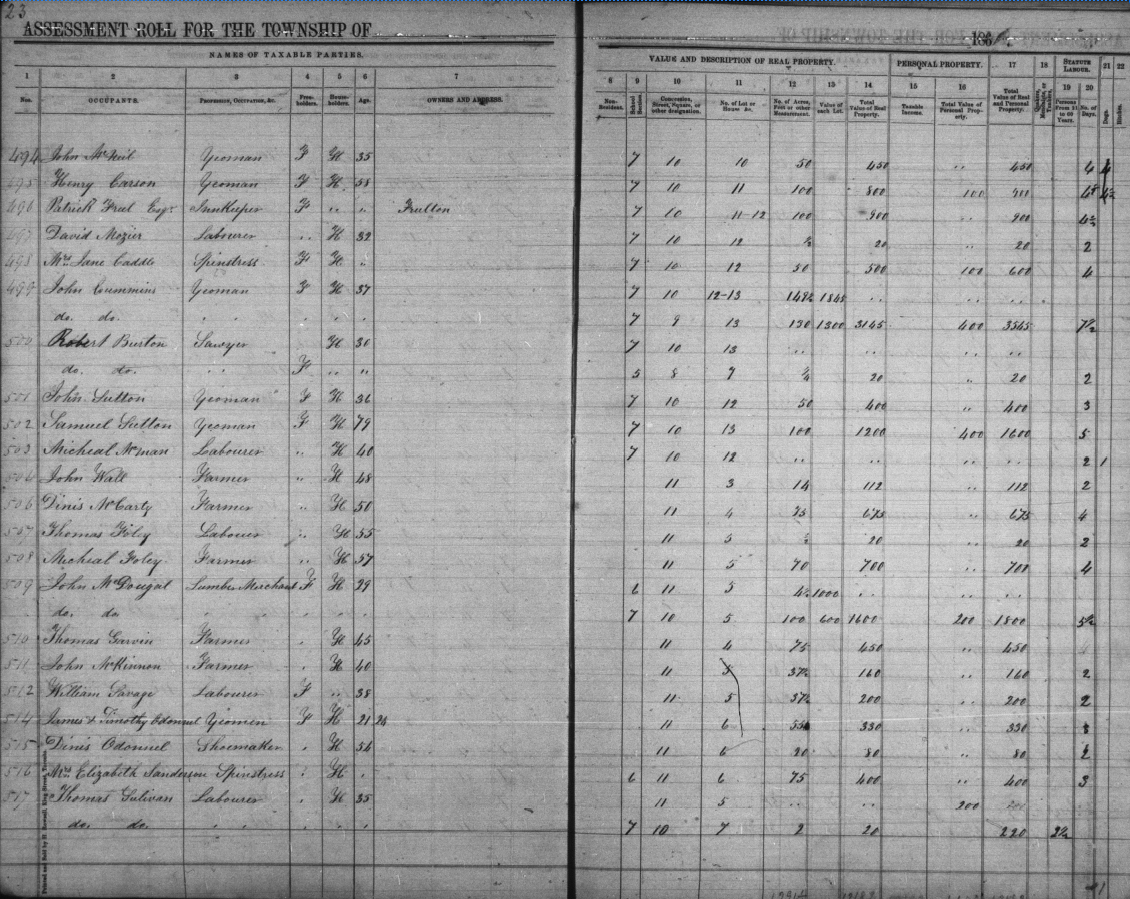
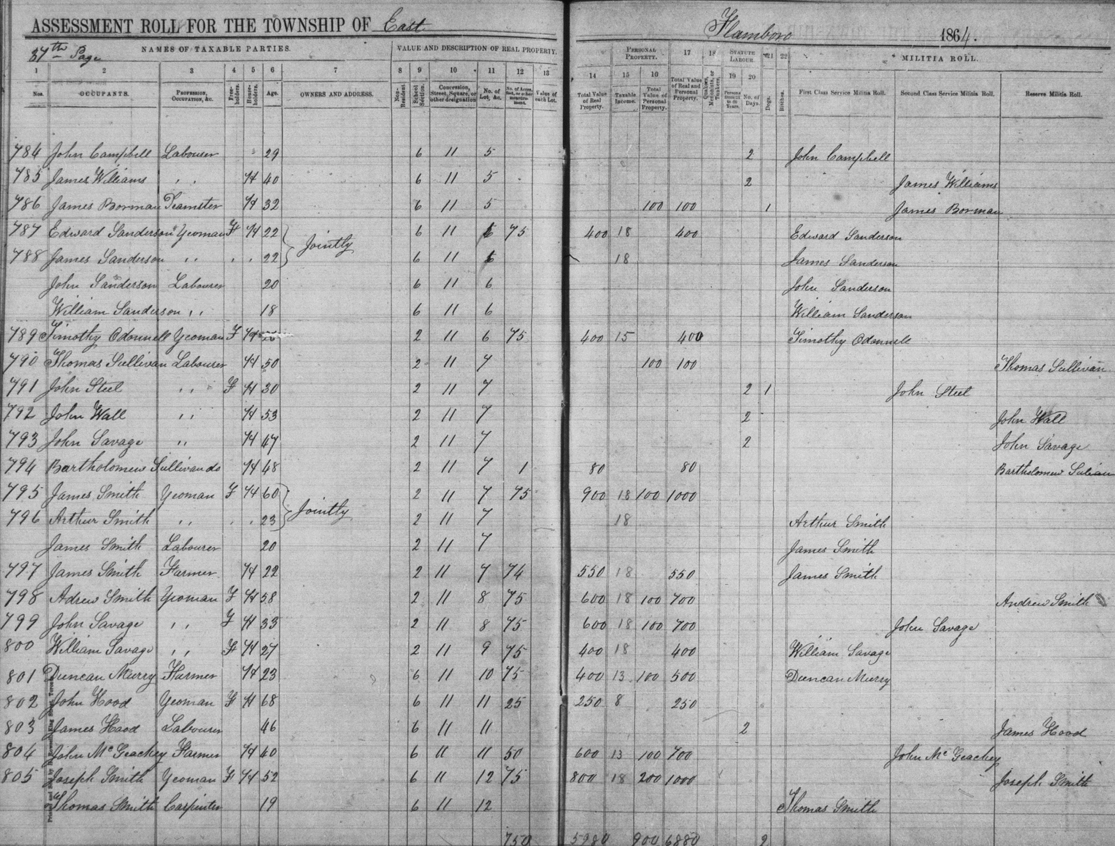
John Wall of East Flamborough. A Timeline of Land Occupancy in Ontario, 1848 to 1864.

This was an AI-aided project that used a series of tax, church and land records to establish the presence of John Wall and his family in Canada between 1848 and 1864.

The records clearly establish his family’s presence in Ontario in this period.

But the value of the AI tool (in this case, Claude) was the rapid development of an interactive timeline and the logical classification of facts (Documented), theories (Plausible) and areas for additional research (Unknown).

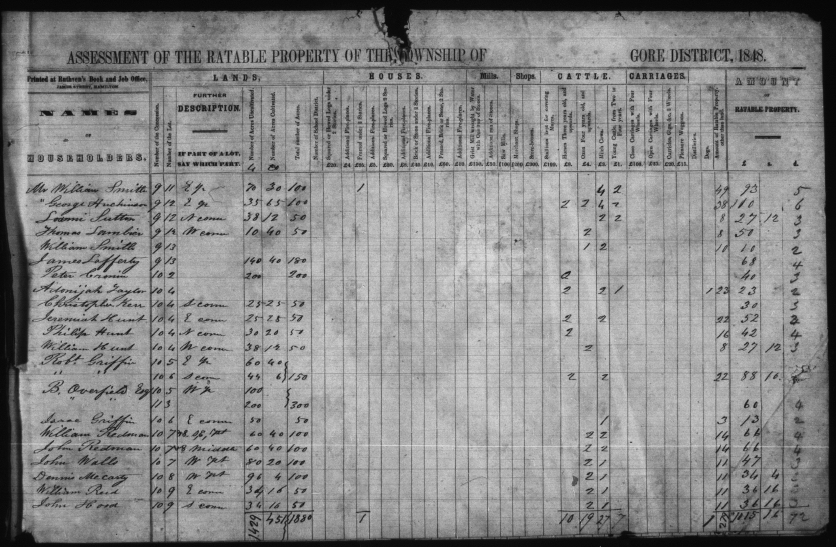
East Flamborough (Gore District), Canada West, “Assessment of the Ratable Property in the Township of [blank] Gore District, 1848.” Courtesy of Local History and Archives, Hamilton Public Library. John Walls [sic] occupies the West part of concession 10, lot 7.
John Wall: timeline of records, 1848 to 1864

John Wall: timeline of records, 1848 to 1864

Each line is marked by how well the records support it. Use the buttons to show one kind at a time.

  • Documentedin a record that has been seen
  • Plausiblea reasonable inference
  • Unknowna gap in the records

Sources

“1861 Census (Canada West),” database, Library and Archives Canada (https://central.bac-lac.gc.ca/.redirect?app=census&id=44839980&lang=eng&ecopy=4391574_00368), entry for Debora Wall (age 8), East Flamboro, Wentworth; citing district 41, sub-district 8, p. 82, LAC microfilm C-1086. The location of the family’s residence is indicated on the Agricultural Census which follows the Personal Census of this enumeration district.

“1900 United States Federal Census,” database with images, Ancestry (https://www.ancestry.ca/search/collections/7602/records/25465188), entry for Abe G Wall (age 34), Saginaw Ward 8, Saginaw, Michigan. Indicates he entered the United States in 1866 at the age of one, and therefore with his family.

David P. Gagan, “Enumerator’s Instructions for the Census of Canada, 1852 and 1861,” Histoire sociale/Social History 7(14) (November 1974): 355-365. “In taking the Agricultural Census … you will take care that opposite each person’s name … the total number of acres occupied … is legibly set down in good figures ….” (Emphasis added.)

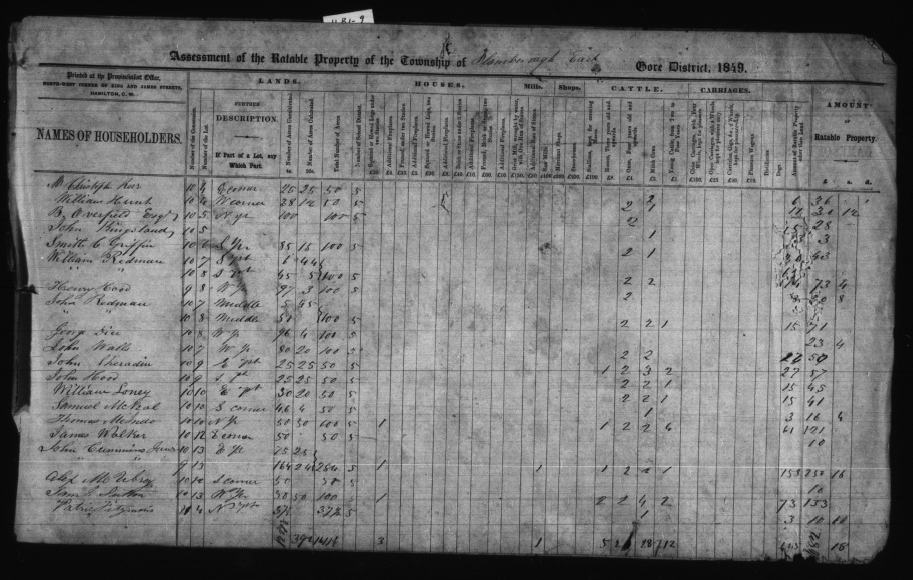
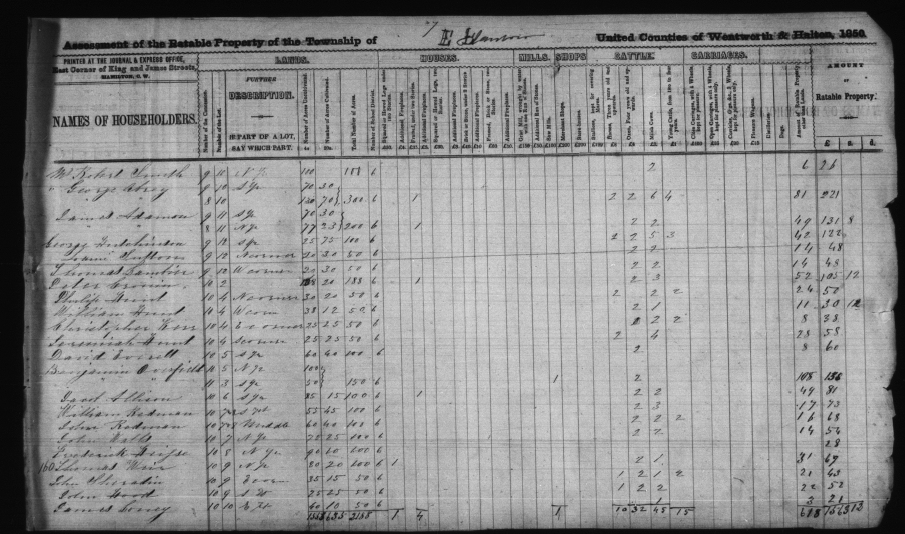
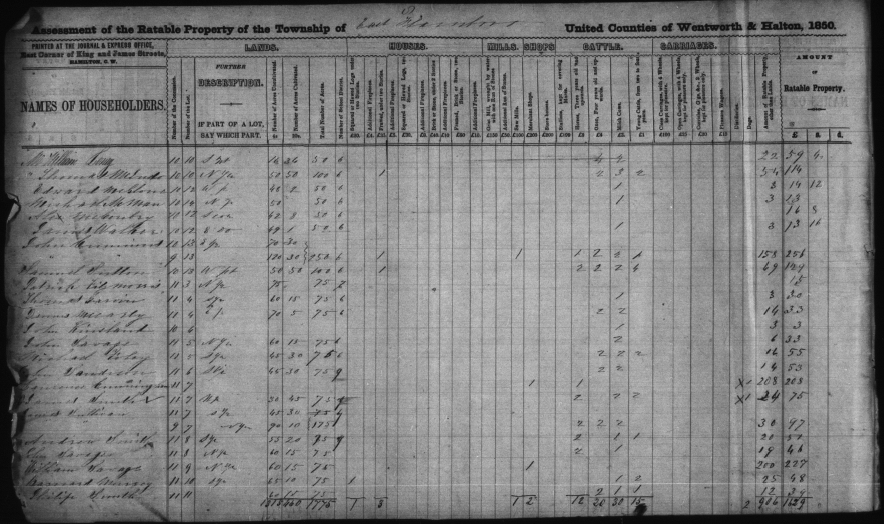
East Flamborough (Gore District), Canada West (later Wentworth County, Ontario), “Tax Assessment of the Ratable Property in the Township of [East Flamborough] Gore District, 1848” and successor rolls to 1864 that include concessions 10 and 11; courtesy of Hamilton Public Library, Local History and Archives.

ONLAND (Ontario Land Property Records Portal), Historical Books, Hamilton Wentworth (LRO 62), Abstract/Parcel Register Books for Concession 10 (lot 7) and 11 (lots 3, 5 and 7) (https://www.onland.ca/ui/62/books/search).

St. Peter’s Cathedral (London, Ontario), “Register B. St. Peters Cathedral, Registry of Baptisms Marriages And Deaths [1852 to 1872],” p. 108, Sarah Wall burial, 15 November 1856; accessed as “Ontario, Canada, Roman Catholic Baptisms, Marriages, and Burials, 1760-1923,” database with images, Ancestry (https://www.ancestry.ca/imageviewer /collections/61505/images/FS_005107213_00005), path: London > Not Stated > Baptism, Marriage, Burial, Confirmation; London; 1843-1922, image 334 of 498.

Tax Records (Images)

When Your Ancestor Has No Birth Certificate: Genealogical Proof and Canadian Citizenship

Canada’s citizenship law changed on December 15, 2025. Effective that day, thousands — possibly millions — of people born outside Canada who have a Canadian ancestor became Canadian citizens.

Since then, many have come to us with questions about Canadian citizenship by descent. That makes sense, because we’re a Canadian genealogical research company. We help clients find information about their ancestors, and we use genealogical research methods and archival sources to prove family connections.

But if you’re considering our services because you’re applying for a certificate of Canadian citizenship, here are some important points.

Certified birth certificates

One thing is clear from the information provided online by Immigration, Citizenship and Refugees Canada (IRCC). They want to see “Birth certificate[s] showing parentage, issued by the responsible government authorities in the country where the person was born.” (See Documents establishing citizenship.)

Obtaining certified copies of birth records from government agencies is something you’ll need to do yourself, because the agencies might require a copy of your I.D., and they might need to know your relationship to the person named in the record.

Older birth records / no birth records

On the other hand, IRCC does not provide information about what documentation they require in historical cases such as:

  • an ancestor born before their birth province started registering births (e.g., Ontario before 1869);
  • an ancestor born during a time of official birth registration, but no registration exists (e.g., a significant percentage of Ontario births after 1869 were never registered);
  • an ancestor whose provincial birth registration, due to its age, has been transferred from the government authority that issues birth certificates (e.g., ServiceOntario) to the provincial archives (e.g., the Archives of Ontario) who make images of birth records available online (e.g., through a partnership with Ancestry.com).

For cases like these, genealogists typically use the image copies of records on Ancestry.com and other family-history websites. We do this because, “in historical research, … [an image copy] is typically treated as an original, so long as no evidence suggests that the image may have been altered.” (Elizabeth Shown Mills, Evidence Explained, 3 rev. ed. (Baltimore, MD: Genealogical Publishing, 2017), 825.

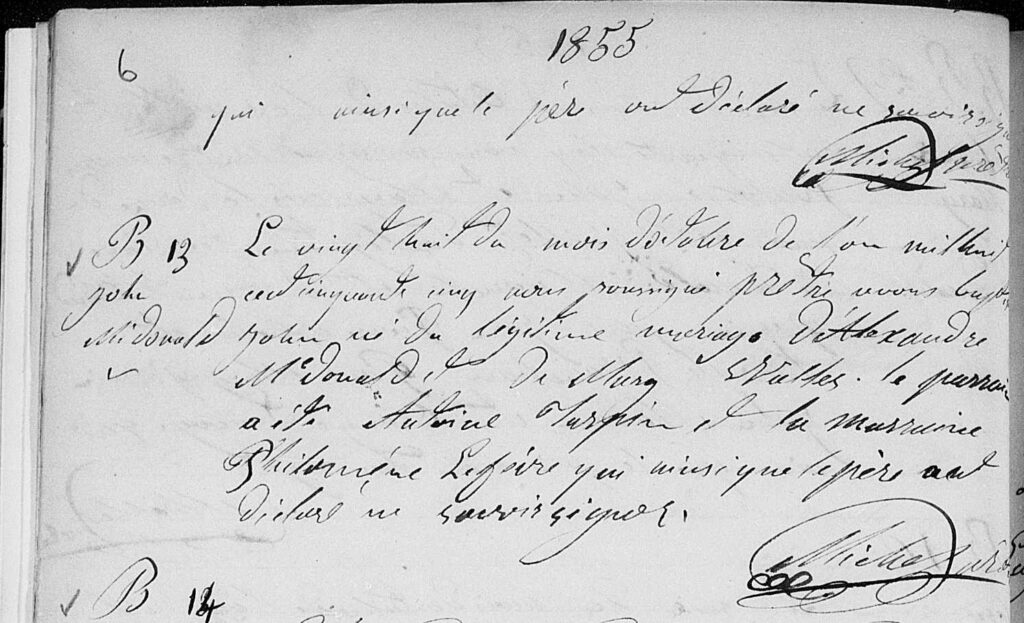
This is an image copy of John McDonald’s 1855 Ontario baptism with a complete source citation:

Sainte Félicité parish (Clarence Creek, Ontario), “Mission de Cumberland – Gloucester (Saint Joseph. Russell (Le Castor) Clarence – Bear Brook, – Plantagenet, etc. etc. depuis l’année 1855. Baptêmes Mariages & Sépultures,” p. 6 (penned), John McDonald baptism, 28 October 1855; accessed as “Canada, Ontario Roman Catholic Church Records, 1760-1923,” image database, FamilySearch (https://www.familysearch.org/ark:/61903/3:1:33SQ-GYW7-7ZT), path: Prescott and Russell > Clarence Creen > Ste Felicite > Baptisms, marriages burials 1855-1871. Vol. 1, image 8 of 337; citing Roman Catholic Archdiocese of Ottawa-Cornwall (https://ottawacornwall.ca/certificate-requests/)

This image would be an acceptable representation of the original document in a genealogical report. However, IRCC signalled in a recent stakeholder meeting (May, 2026) that they will not accept documents sourced from Ancestry.com — or, presumably, other any online resource. This guidance does not appear in IRCC’s public-facing information.

So when a genealogist provides you with images of archival documents from Ancestry.com or other online resources — standard practice in genealogy — you may need to obtain copies of the same records directly from the archives if you’re using them to apply for a certificate of Canadian citizenship.

According to IRCC, an applicant should be able to complete the process without assistance:

You can get all the forms and instructions you need to apply for a visa, a permit or citizenship for free on this website. If you follow the instructions, you should be able to fill out the forms and submit them yourself.

But given the conflict between genealogical practice and IRCC requirements, we recommend consulting a citizenship representative who specialises in Canadian citizenship by descent, because they may have received guidance directly from IRCC.

What a genealogist can do

Genealogists are experts at using archival records to prove questions of identity and kinship.

For example, when no birth record exists, we use the Genealogical Proof Standard (GPS) to prove the case. The GPS requires us to undertake reasonably exhaustive research, create complete source citations, test and analyse the evidence, resolve any conflicting information and provide the results in a coherently written format. (Board for Certification of Genealogist, Genealogical Standards, 2nd. rev. ed. (Nashville, TN: Ancestry, 2021).)

Consider this case: If your ancestor, John McDonald, was born in Clarence Creek, Ontario in 1855, he won’t have a birth certificate because Ontario didn’t start registering births until 1869. That doesn’t change the fact that the ancestor was born in Canada.

In a case like this, a genealogist can find and assess a variety of historical documentation to prove John McDonald was born in Canada. In addition to his 1855 Ontario baptism record, he may be listed with his parents in the 1861 census of Canada West. Those two documents, included in a written report, would provide genealogical proof that John was born in Canada.

This approach is consistent with IRCC’s guidance about Applications for citizenship certificates, which says:

The documents required to establish citizenship vary depending on the requirements of the provision of the Citizenship Act under which citizenship is being established.

All applicants must provide

  • documents establishing citizenship outlined in the document checklist at the end of the Application for a Citizenship Certificate for Adults and Minors (Proof of Citizenship) Under Section 3 form;
  • other documents, as required, for the assessment of the claim to Canadian citizenship and the possible loss of citizenship.

So if your ancestor was born in Canada before provincial birth registration, you may still be able to establish your Canadian citizenship. IRCC’s language is broad enough to allow for additional documentation (i.e., “other documents … for the assessment of the claim”), though it gives no specific guidance on documentation for ancestors with no official birth record.

Here’s what we can do

We can research your family history, identify the records that exist, locate the provincial or territorial agencies that hold them, and — where no birth or baptismal record survives — prepare a Canadian ancestry or birth evidence report that meets the Genealogical Proof Standard.

Here’s what we can’t do

We can’t tell you what documents IRCC will require or accept for your application.

We can’t obtain certified copies of birth records from provincial or state agencies.

Under the Citizenship Act, we can’t advise you — directly or indirectly, and for payment — in connection with your citizenship application. That role belongs to a lawyer, Quebec notary or licensed immigration consultant.

Our promise to you

What we can promise is that when you come to us, you’ll know exactly what the historical record says about your ancestor’s Canadian birth and your Canadian lineage. That’s the foundation any citizenship application needs — and it’s what we do best at dfh Research Services.


Clients can request copies of Quebec or Ontario birth certificates from these government authorities: 

Directeur de l’Etat Civil. They issue Quebec birth certificates: 
https://www.etatcivil.gouv.qc.ca/en/certificate-copy/certificate-copy.html

Bibliothèque et Archives nationales du Québec. They issue certified copies of archival parish registers that were authorised at the time as civil records: https://www.banq.qc.ca/notre-institution/banq/ordering-copies/ 

ServiceOntario. They issue Ontario birth certificates. https://services.ontario.ca/oca-web/main

Archives of Ontario. They issue certified copies of archival provincial registers. https://www.archives.gov.on.ca/order-reproductions/