DNA Identifies the Father of an English-born Child
Growing up in London, England, Elaine’s biological father was a mystery. Her mother said he had been a Canadian airman stationed in Europe in the late 1950s. Beyond that, there were no names, no records, no photographs — just a story, repeated but never explained.
For decades, Elaine wondered who her father was. In time, genetic genealogy would lead to the answer.
Following the DNA Clues
When Elaine first looked through her DNA results, she noticed something interesting and quite surprising: many of her closest paternal matches were from Western Canada, particularly from families with roots in German immigrant farming communities that had settled in southern Manitoba and Saskatchewan.
Two names began appearing again and again among her matches’ family trees:
Schmidt and Dawson.
One group of matches traced back to a Schmidt family who had lived on the Canadian Prairies for generations. Another cluster of matches traced back to a Dawson family in the same area.
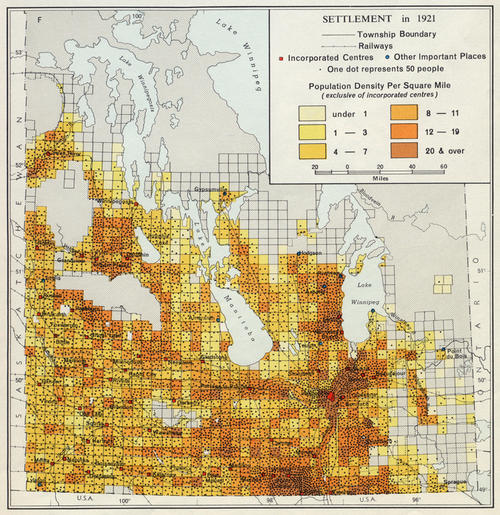
These findings prompted further research to identify a “union couple” — perhaps a marriage between a member of the Schmidt and Dawson families — because descendants of that couple would have inherited the same DNA pattern found in Elaine’s results. In other words . . .
Elaine’s father was probably the son of a Schmidt parent on one side, and a Dawson parent on the other.
Additional evidence indicated the Schmidt parent was likely Elaine’s grandfather. Further research showed there was only one son born to a Schmidt father and a Dawson mother in the right time period, and in the right place. That son would later serve in the Canadian military in the 1950s.
A Brief Marriage, a Young Son, a Difficult Loss
In the early years of the 20th century, Ernst Schmidt — a young farmer — married Lillian Dawson, the daughter of a nearby homesteading family.
Their marriage was heartbreakingly short. Lillian died just two years later, likely due to complications following childbirth. She left behind two small children — a baby boy named Peter and an infant daughter.
Peter grew up in rural Manitoba and enlisted in the Canadian military as a young man.
Publicly available military records showed his unit was posted to Germany in 1957. But whether he was ever in London around that time remained a mystery.
DNA Confirmation Strengthened the Case
To test the theory that Peter Schmidt was Elaine’s biological father, dfh DNA Family Help compared the amount of DNA Elaine shared with matches on both sides of Peter’s family — Schmidt relatives and Dawson relatives.
The numbers aligned perfectly with what would be expected if Peter Schmidt were Elaine’s biological father.
Every piece of evidence — DNA clusters, shared matches, family connections, timelines, and geographic movement — pointed to the same conclusion:
Elaine’s father was almost certainly Peter Schmidt, a Canadian soldier born in Manitoba in the 1930s.
Peter passed away in the late 1990s, but traces of his life remain — including a gravestone in Western Canada that includes the insignia of his military regiment, and his military personnel file, which remained in the archives of the Department of Defense. After the genetic investigation concluded, Peter’s niece obtained a copy of that file, which proved Peter was in London the year before Elaine’s birth.
A Life Reconnected
For Elaine, the discovery was deeply meaningful. Her ancestry wasn’t the story of a brief romance during the Cold War that faded into silence.
It was the story of Canadian prairie farms, immigrant grit, young love, loss, and a branch of family never knew she existed — until DNA helped bring the pieces back together.
Canadian Citizenship by Descent
Elaine’s discovery made her eligible to apply for a certificate of Canadian citizenship. That’s because “In 2009, you became a Canadian citizen if you: were born outside Canada in the first generation to a Canadian parent on or after January 1, 1947, and you lost or never had citizenship due to former citizenship provisions.” (Source: https://www.canada.ca/en/immigration-refugees-citizenship/services/canadian-citizenship/act-changes/rules-2009-2015.html)
Recent changes to the Citizenship Act removed that first generation limit.
Because her father was in the Canadian Armed Forces at the time of her birth, Elaine could also pass her citizenship to her UK-born children. That restriction (that a person in the second generation born outside Canada was a Canadian citizen only if their grandparent was in the Canadian Armed Forces, or the federal public administration, or the public service of a province or territory at the time of their parent’s birth) changed on December 15, 2025, when Bill C-3 amended the Citizenship Act to remove the “First Generation Limit.” Now, according to an email received from the office of the Minister of Immigration, Refugees and Citizenship Canada, the law is simply this:
To be eligible for Canadian citizenship by descent, a person born abroad before December 15, 2025 must have an ancestor who became a Canadian citizen on or after January 1, 1947 (or on or after April 1, 1949, in Newfoundland). This includes those whose ancestor became a citizen through the 2009, 2015, or 2025 amendments to the Citizenship Act.
In Elaine’s case, she not only identified her biological father, she and her children also became Canadian citizens. All thanks to the power of DNA!
All names in this post have been altered for privacy.